Apple
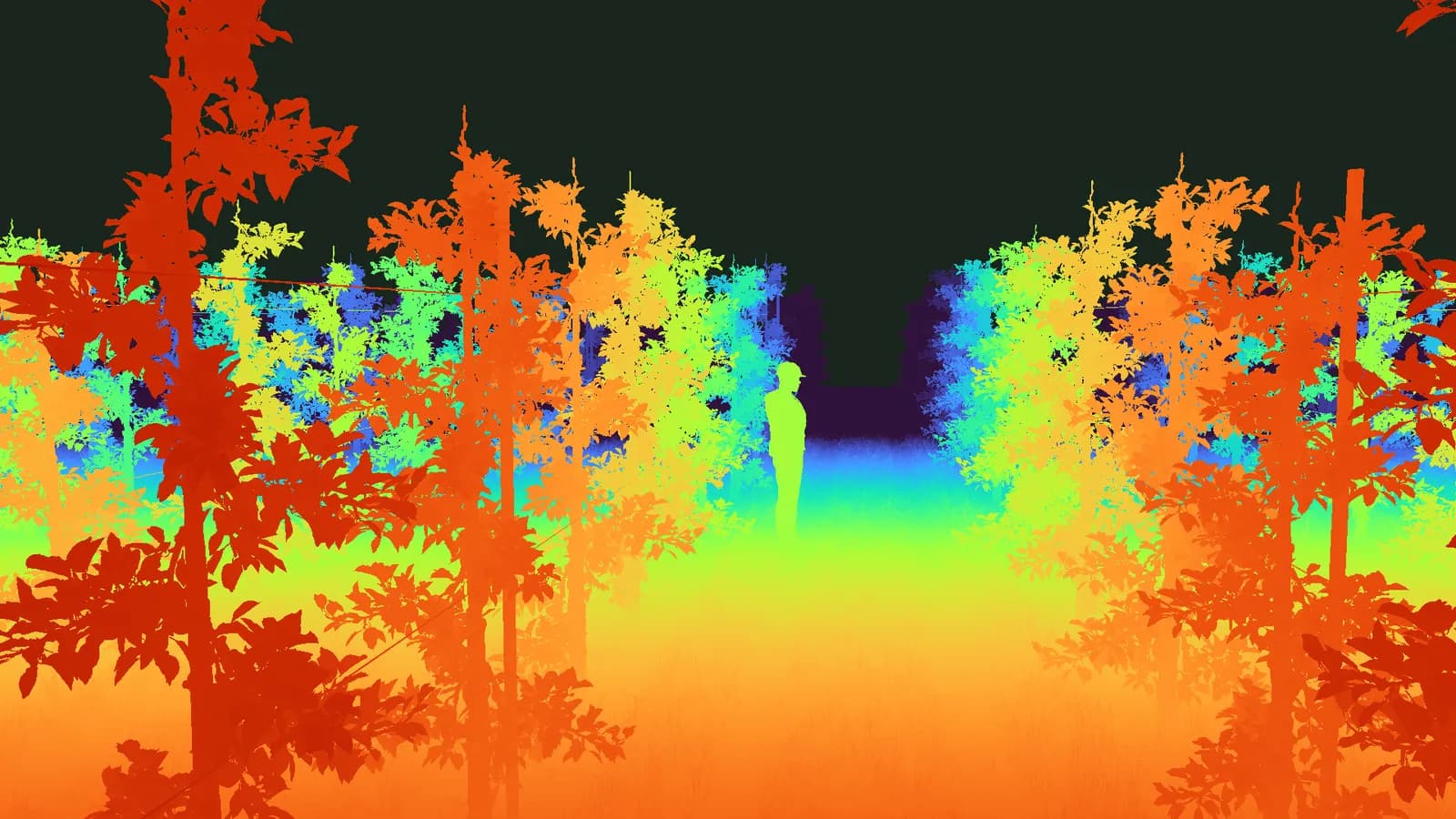
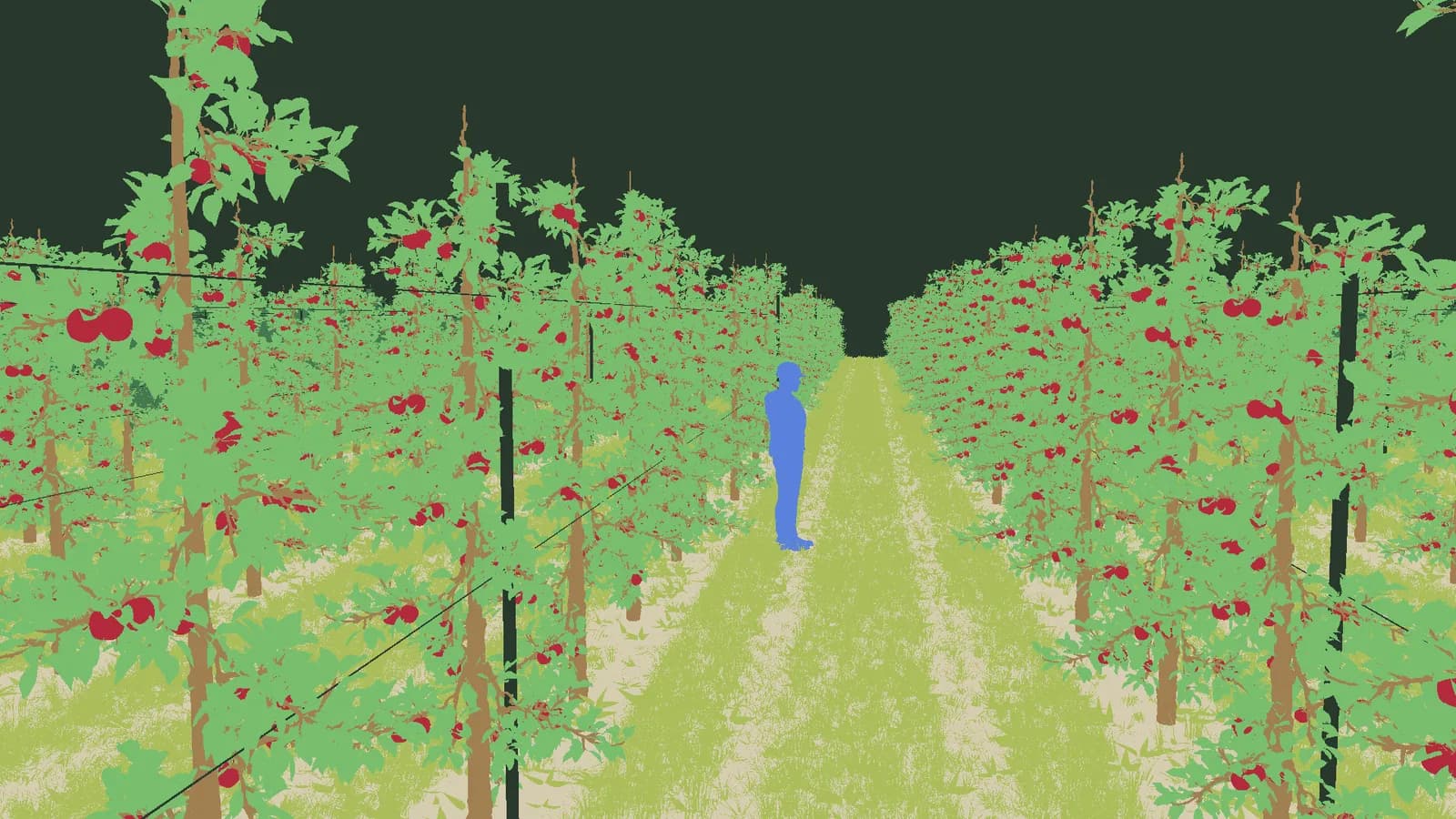
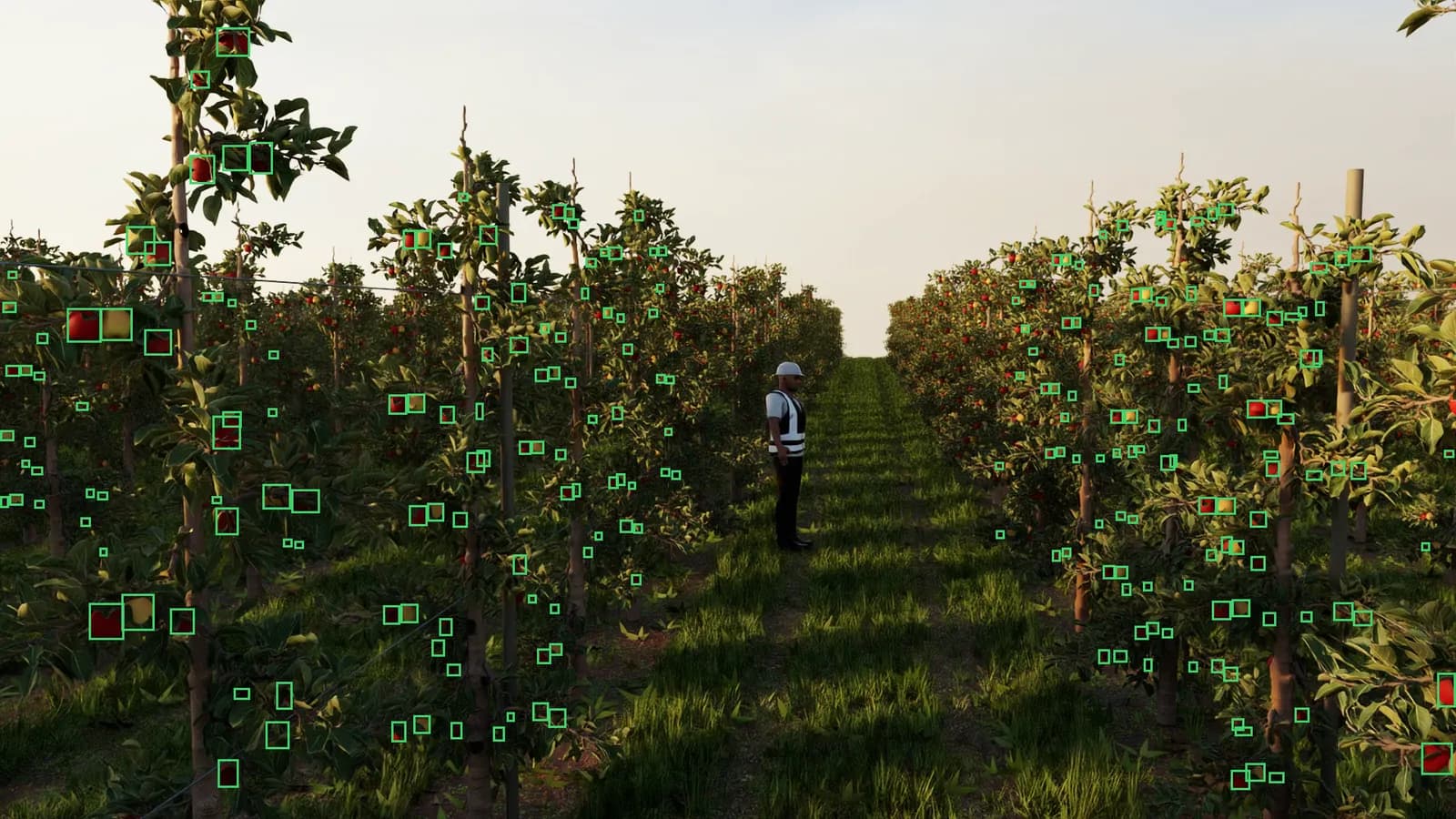
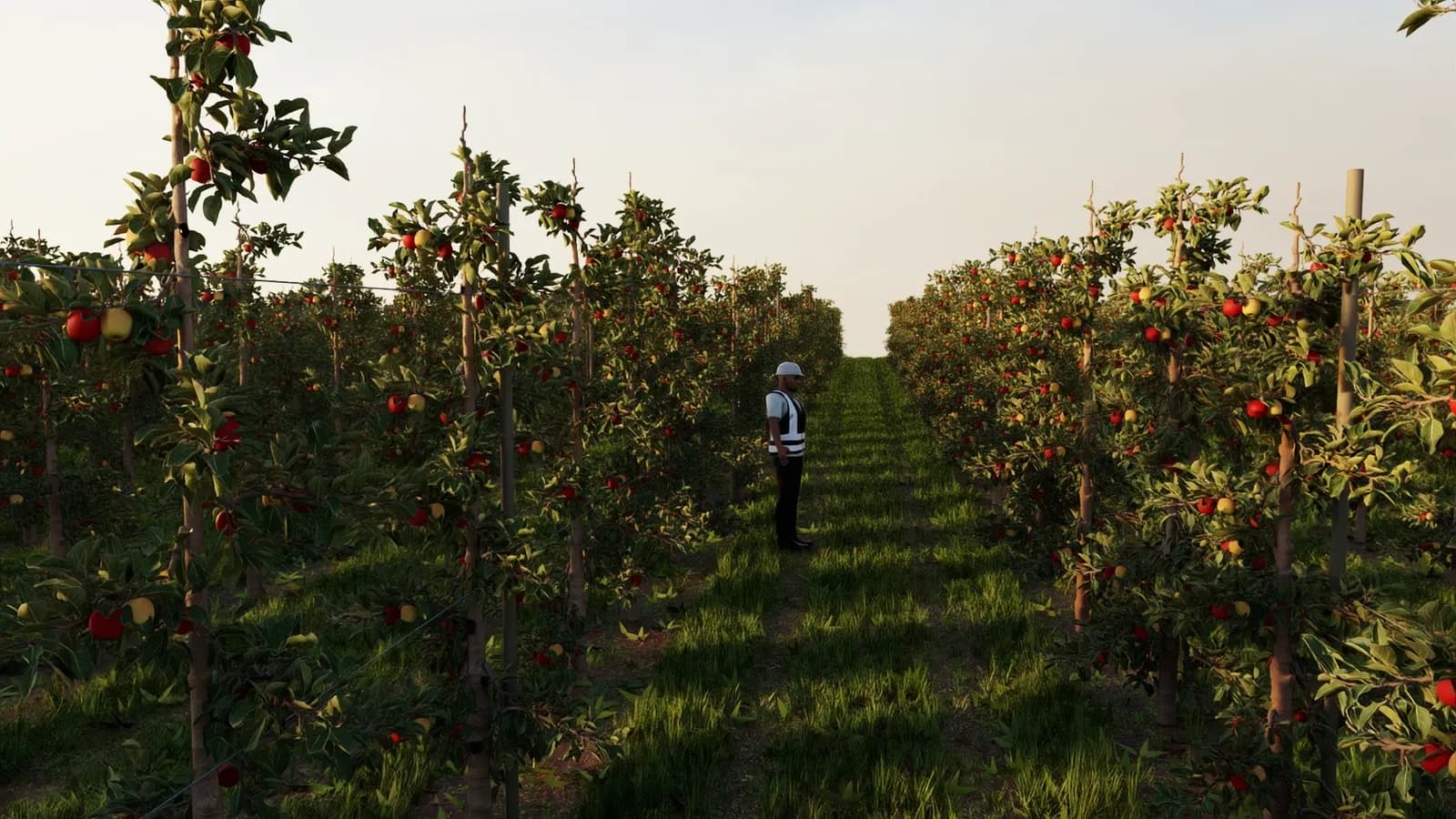
High-density trellis orchard: 2,405 trees in 37 rows of 65.
Everything you see here is simulated.
Simulated orchards for agricultural robots. Real plant structure, real physics, and labelled sensor data on every frame. Test your robot before the season starts.
Field robots get one harvest a year to test on. In simulation, the whole season runs in minutes and can be repeated as often as you need.
Branches grow, leaves fill in, apples ripen from green to red and drop to the ground under physics.
Camera, depth, segmentation and bounding boxes from the same render, aligned to the pixel. No manual labelling.
Every stem has a detachment force. Branches bend and spring back, and leaves collide with the gripper.
Each pick is scored as a success, a miss or a damaged branch.
The gripper, the plant and the detachment are all simulated. Contact forces, stalk failure and the fruit's swing come from the physics, not from animation.
Each crop starts as one plant with its real structure: trunk, branches, leaves and fruit. It then varies into full rows at real planting spacing.
High-density trellis orchard: 2,405 trees in 37 rows of 65.
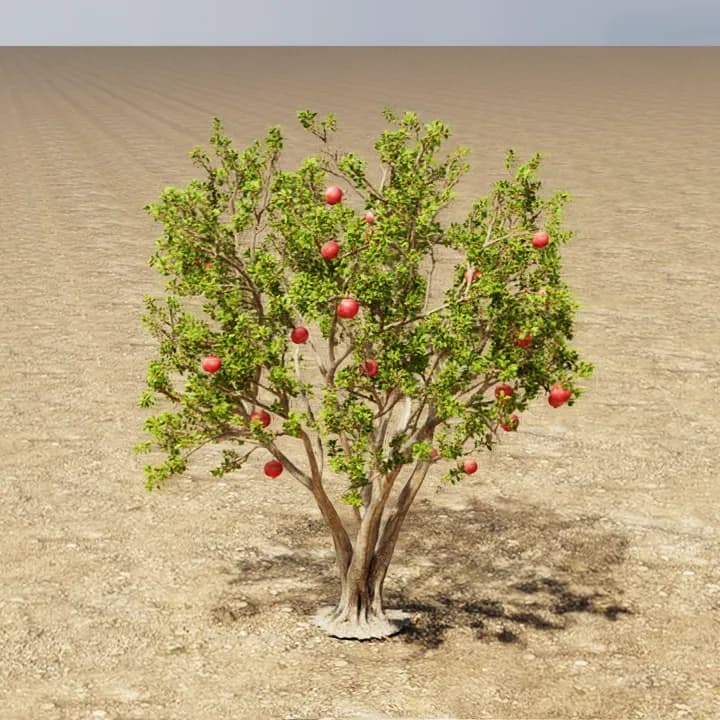
Multi-stem bushes, 63 plants in 7 rows at 4.0 m by 2.8 m.
Vine, truss and trough crops built with the same pipeline: stems, leaves and fruit as separate parts, ready for physics.
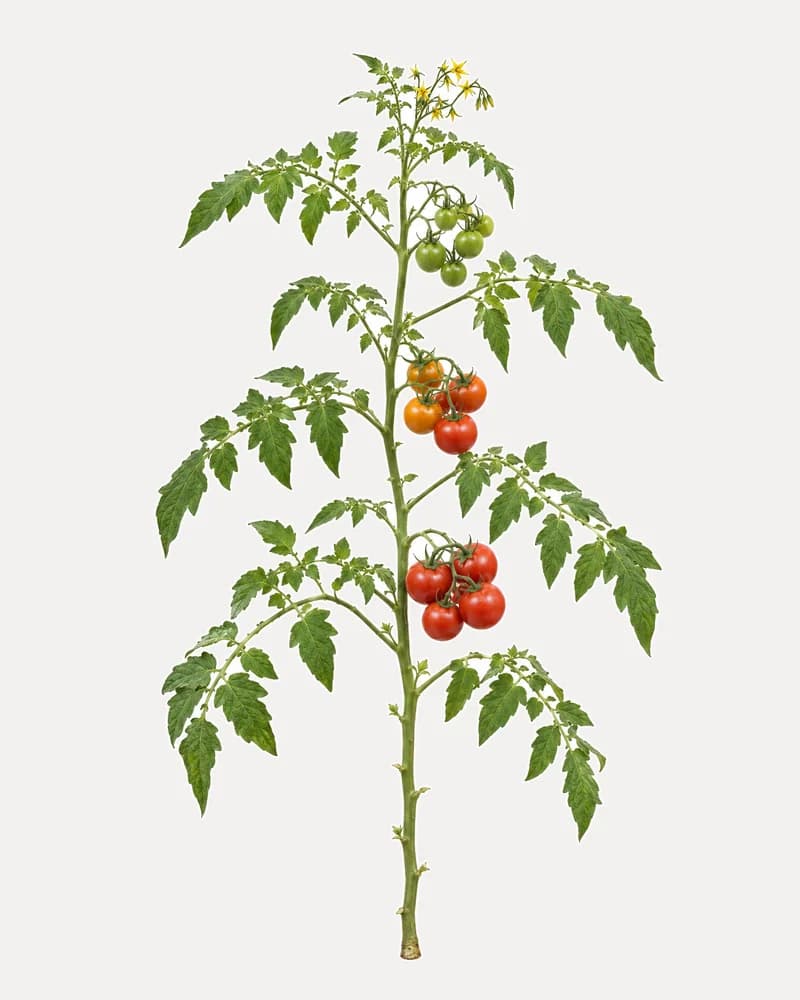
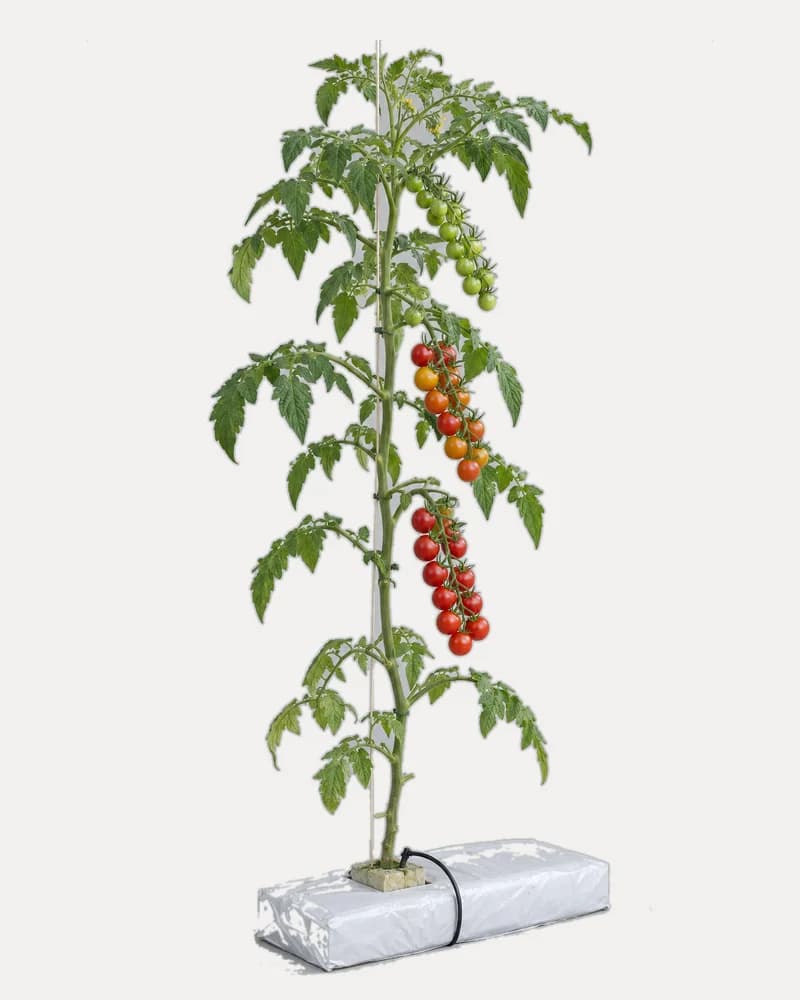
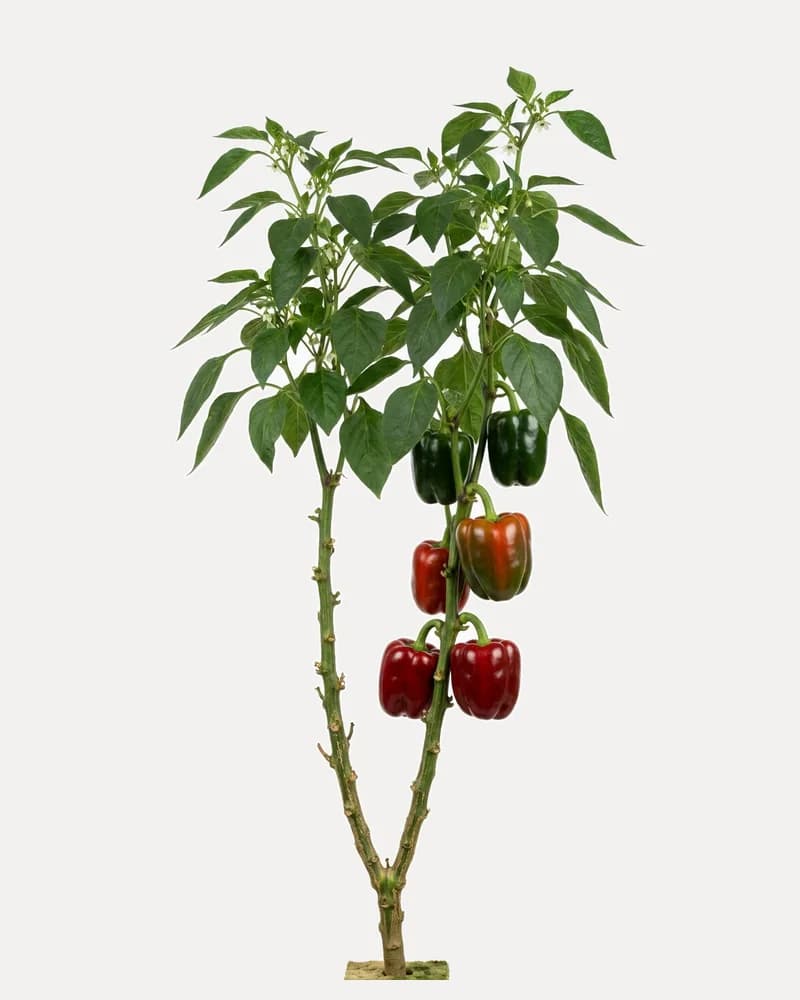
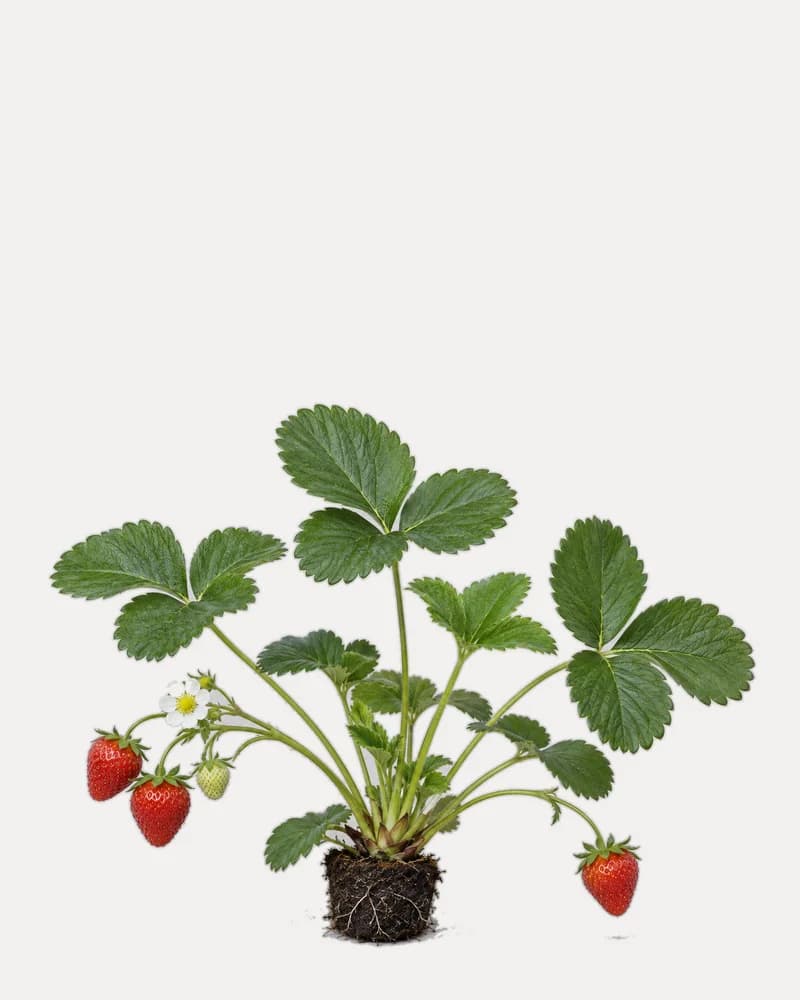
Illustrations.
Sun, overcast, golden hour, bare soil or grass cover. Change the conditions without changing the orchard.
We pretrained an apple detector on simulated orchards, fine-tuned it on a few real photos, and tested it on real orchard images. We compared it with the same detector trained on real photos only.
With 7 real images, the sim-pretrained model beats a real-only model trained on 67.
We build the plant from its real structure and give each fruit a detachment force.
Plants vary and fill rows at real spacing, under the conditions you need.
Bring your robot model. Your software connects over ROS 2, the same as on hardware.
Run thousands of trials overnight, score them, and export labelled data.
Write to info@12amrobotics.com
Building a picker, pruner or sprayer? Test it in our simulated orchards.
Talk to usPlant models, physics and labelled synthetic data for perception and manipulation research.
Propose a collaborationWe're talking to investors about our first institutional round.
Ask for the deckHiring across simulation, physics, rendering, perception and ML. Send us something you've built.
Get in touch